Guide
What to Put on a Cake Order Form (Checklist for Home Bakers)
The 10 sections every cake order form needs, from pickup time and servings to allergies, deposit and cancellation terms, so no order gets lost in your DMs.
 By Mina, Sorted Templates · November 9, 2026 · 4 min read
Most order mix-ups in a home bakery don’t come from the baking. They come from a detail that was agreed in a message three weeks ago and never written down: the pickup time, the spelling of a name, a nut allergy. A cake order form puts every one of those details in one place before you start. Here’s what to put on it.
The short checklist
- Customer contact details
- Event date and pickup or delivery time
- Servings and size
- Flavor, filling and frosting
- Design and inspiration photos
- Writing on the cake
- Allergies and dietary needs
- Price, deposit and balance due
- Changes and cancellations
- Agreement and signature
A simple one-page form can cover all ten. Keep the questions short so customers actually fill it in.
1. Customer contact details
Full name, phone number and email, plus the way they prefer you to contact them. Ask for a second contact if someone else is picking the cake up. It saves a frantic search through your messages on pickup day.
2. Event date and pickup or delivery time
Write down two dates: the event date and the pickup or delivery date and time. They aren’t always the same, and mixing them up is one of the most common order mistakes.
For delivery, add the full address, a contact on site and any notes about parking or stairs. If you charge for delivery, put it on its own line so customers can see it.
3. Servings and size
Ask how many people the cake needs to serve, then choose the size together. Customers think in guests, not inches. Note the slice size you’re using, since a party slice and a wedding slice give very different counts. Our cake pricing calculator includes a serving calculator for any tier size.
For cupcakes and cookies, ask for the quantity in dozens and whether they want them boxed individually.
4. Flavor, filling and frosting
List your flavors, fillings and frostings as tick boxes, not blank lines. Customers choose faster, and you won’t get requests for flavors you don’t make. For tiered cakes, leave room for a different flavor in each tier.
Add a line for frosting type (buttercream, cream cheese, ganache, fondant), because it changes your price and how the cake travels.
5. Design and inspiration photos
Ask for colors, theme and up to three inspiration photos. Say clearly on the form that inspiration photos are a guide and your cake will be your own version. A small sketch box helps too, and it’s often the part customers enjoy most.
6. Writing on the cake
Give the message its own box, and ask customers to print it exactly as it should appear. Names are the classic mistake: Kaitlyn, Caitlin and Katelyn are three different cakes.
7. Allergies and dietary needs
Ask about allergies on every order, even when the customer doesn’t mention any. List the main allergens you use in your kitchen, such as wheat, milk, eggs, nuts, peanuts and soy, and say plainly if you can’t guarantee an allergen-free cake. Many cottage food rules also say what your labels must list, so check your local rules.
8. Price, deposit and balance due
Write the agreed price, the deposit and the date the balance is due. Many bakers take a non-refundable deposit, often 25% to 50%, to hold the date, and ask for the balance a few days before pickup. Add rush fees for short-notice orders if you charge them.
If you’re not sure what to charge yet, start with how much to charge for a cake.
9. Changes and cancellations
Say how late a customer can change the design or flavor, and what happens to the deposit if they cancel. Keep it to two or three short lines on the form, and put the full details in your bakery policies.
10. Agreement and signature
End with a line saying the customer has checked the details and agrees to your policies, then a name, signature and date. A typed name works for orders taken online. When a question comes up later, you both have the same record.
Paper, PDF or online?
Use whichever your customers will actually fill in. Some bakers print the form for in-person consultations, others send an editable PDF or copy the questions into an online form. The questions matter more than the format. Keep a copy of every completed order in one folder so you can find it quickly.
Before you sell
Selling food from home is covered by cottage food rules, which vary by state and country. Check your local rules for what you can sell and what your labels must say. This guide is about organizing orders, not legal advice.
Ready-made forms
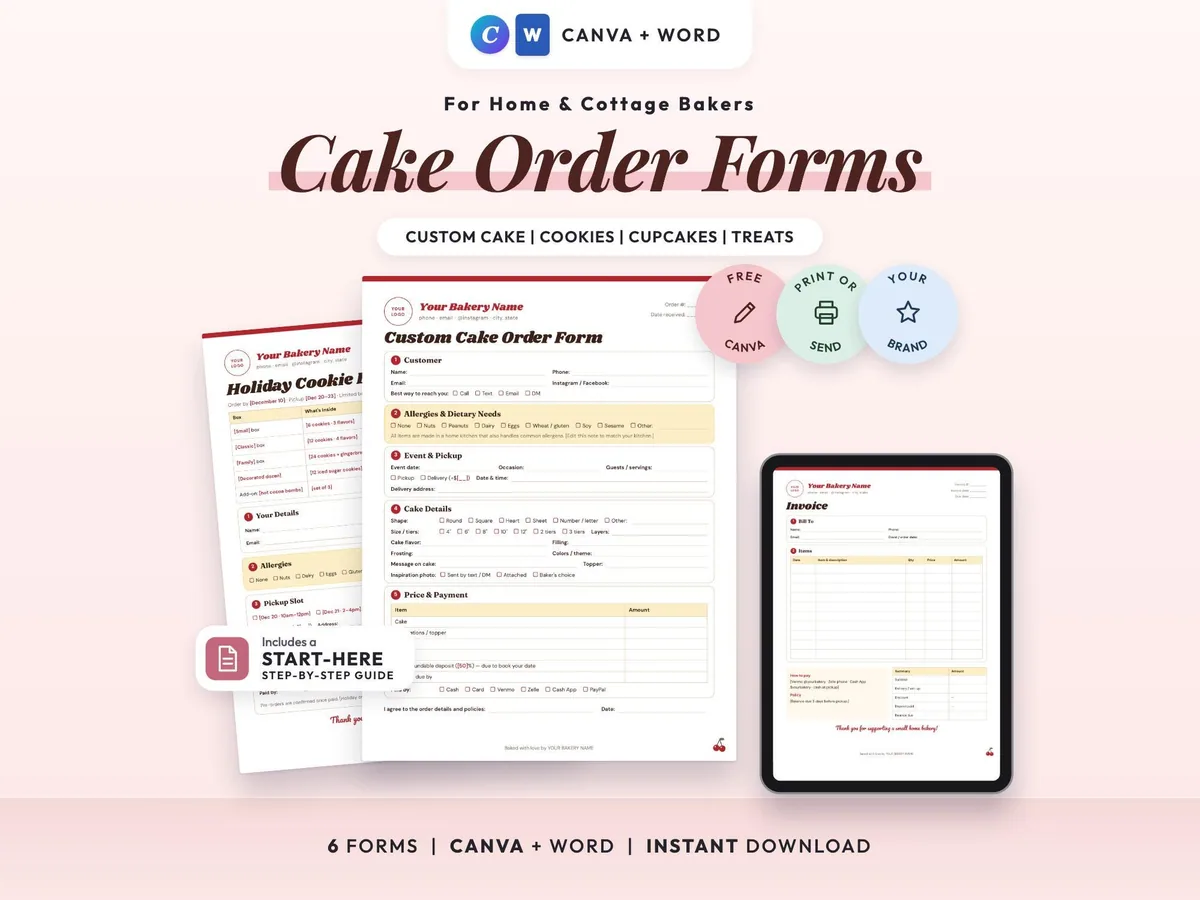
If you’d rather not build a form from scratch, our editable order forms ask these questions for cakes, decorated cookies and cupcakes, allergies first, in Canva and Word.
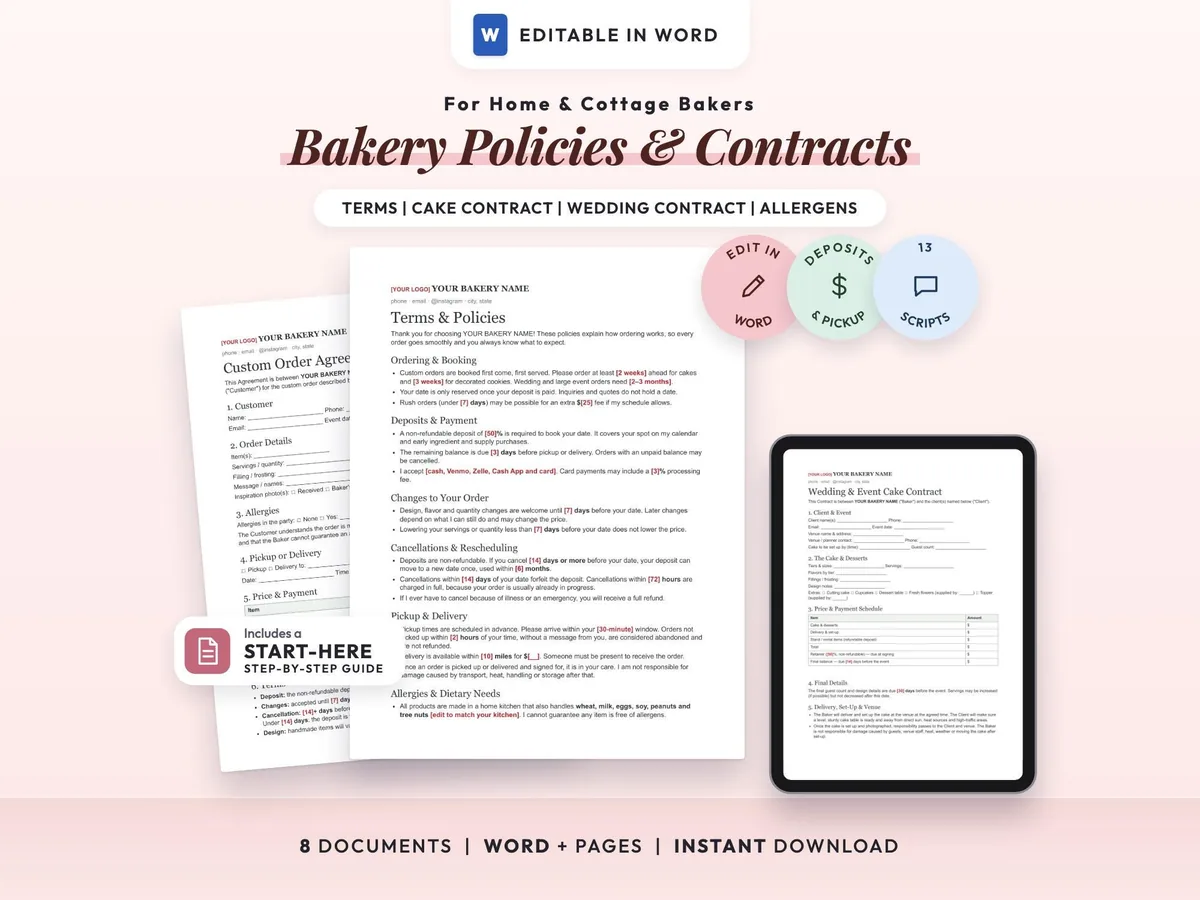
For the full terms behind sections 8 and 9, our policies template covers deposits, changes, cancellations and allergies.
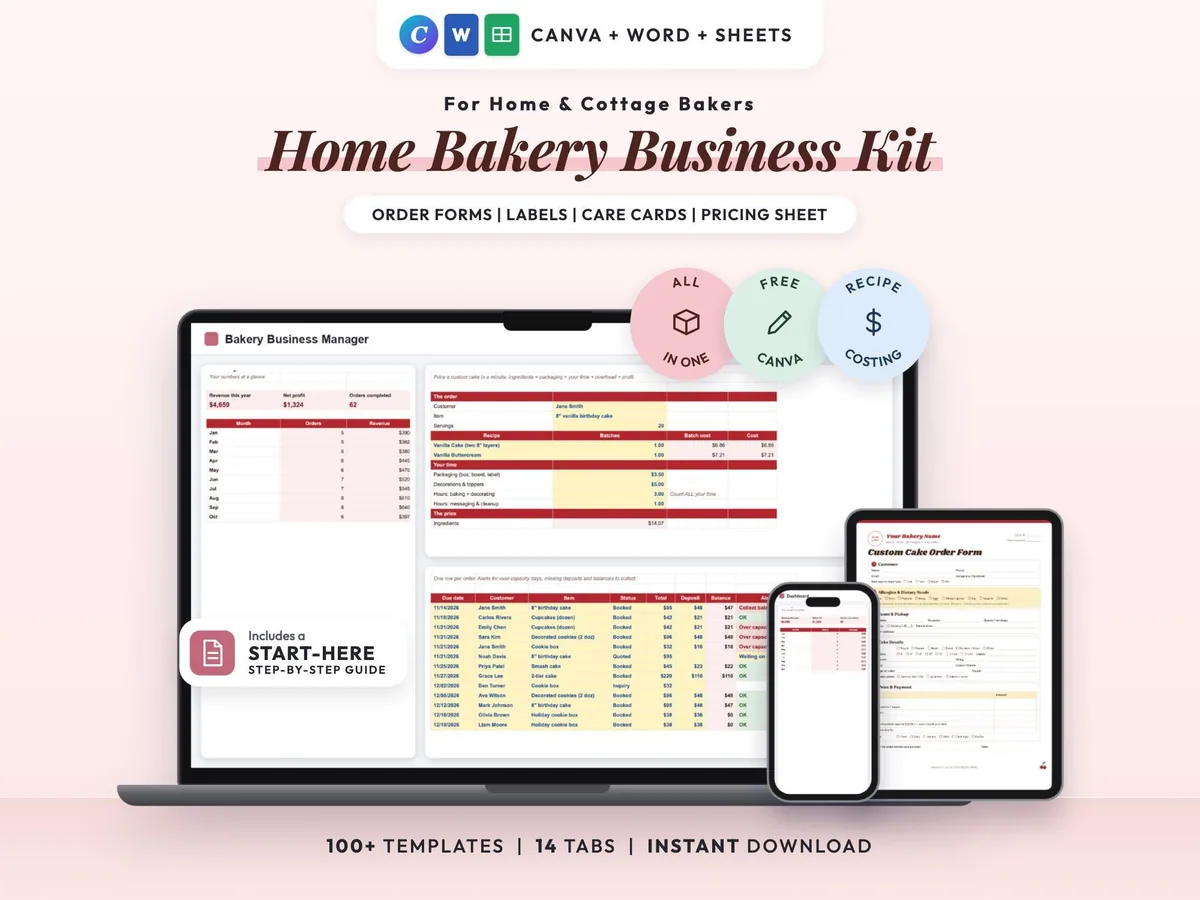
Starting a home bakery? The full kit has order forms, pricing, labels and policies together.
How we write guides: drafted with help from AI tools, then checked, edited and tested by us against our own templates. Spotted something wrong? Email [email protected].